
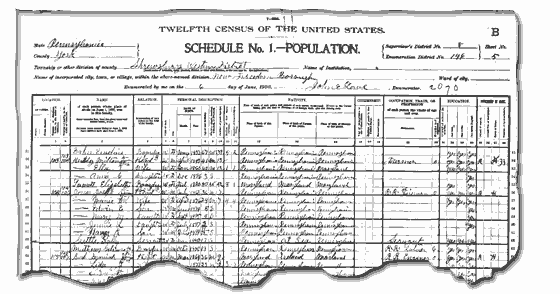
Census records are among the most valuable resources for genealogists. These governmental surveys, typically conducted every decade, capture snapshots of families, communities, and societies over time. For beginners embarking on their genealogical journey, understanding how to navigate census records can unlock vast amounts of information about ancestors’ lives. This guide aims to provide insights, guidance, and inspiration for both novice and experienced genealogists on how to effectively use census records in their research.

Understanding Census Records
Census records collect data on the population at specific intervals, usually every ten years. In many countries, including the United States, census records include valuable information for genealogists such as names, ages, birthplaces, occupations, and relationships to the head of the household. However, the type and depth of information vary by year and location.
The Evolution of Census Questions
Over time, census questions have become more detailed. For instance, early U.S. censuses (1790-1840) listed only the head of the household by name, categorizing other household members by age range and gender. It wasn’t until 1850 that all individuals were named, with subsequent censuses adding questions about birthplaces, marital status, occupations, and more.
Privacy Restrictions
Most countries have privacy laws that restrict access to recent census records. For example, in the United States, census records are released to the public 72 years after they were taken. Understanding these restrictions is crucial for planning your research.
How to Access Census Records
Online Databases
Several online platforms provide access to digitized census records. Websites like Ancestry.com, FamilySearch.org, and Findmypast have extensive collections of census records from the U.S. and other countries. While some sites require a subscription, FamilySearch offers free access to its vast digital archives.
National and Local Archives
For records not available online or for those preferring to conduct research in person, national and local archives are invaluable resources. Many archives offer access to census records on microfilm or in other formats.
Library Resources
Libraries, especially those with dedicated genealogy sections, often provide access to census records and other genealogical resources. Local libraries may also have specific collections relevant to the area’s history and population.
Tips for Navigating Census
Records Start with What You Know
Begin your search with the most recent census available for your ancestor and work backward. Starting with known information helps verify that you’ve located the correct person or family before delving into older records.
Pay Attention to Details
Census records are filled with clues that can lead to new discoveries. Note everyone listed in the household, as well as neighbors; families often lived near relatives or future spouses. Pay attention to occupations, birthplaces, and any other details that could lead to additional records.
Use Enumerated Dates
Each census has an enumerated date — the date on which the information was supposed to reflect. Knowing this date can clarify ages, marital statuses, and other temporal details.
Understand Abbreviations and Markings
Census takers often used abbreviations or special markings to denote certain statuses, such as widowhood, unemployment, or immigration status. Familiarize yourself with common abbreviations and symbols used in the censuses you’re examining.
Consider Enumeration Errors
Census records are not infallible. Names can be misspelled, ages may be inaccurate, and information may be omitted or incorrect. Always consider alternate spellings and possible transcription errors, especially when searching indexed records online.
Look Beyond Names and Dates
Census records can tell you more than just the names and ages of your ancestors. They can provide insights into family dynamics, socio-economic status, migration patterns, and community structures. This broader context enriches your understanding of your ancestors’ lives.

Census records are a cornerstone of genealogical research, offering a wealth of information and insights into the lives of our ancestors. For beginners, learning to navigate these records is a critical skill that opens up new avenues of discovery. By understanding the scope and limitations of census records, knowing where and how to access them, and developing strategies for extracting and interpreting the information they contain, genealogists can piece together the stories of past generations. Remember, each record is a piece of the puzzle, and with patience and perseverance, the picture of your family’s history will come into clearer view.

 Jackie's Genealogy
Leave a comment